From Crisis to Stability
The CoC Marketing Committee gathered a few stories from this year’s Point-in-Time Count to help highlight the real experiences behind the numbers. These stories offer a small glimpse into the challenges many individuals face and the ongoing work happening across the community to support housing stability and long-term recovery.
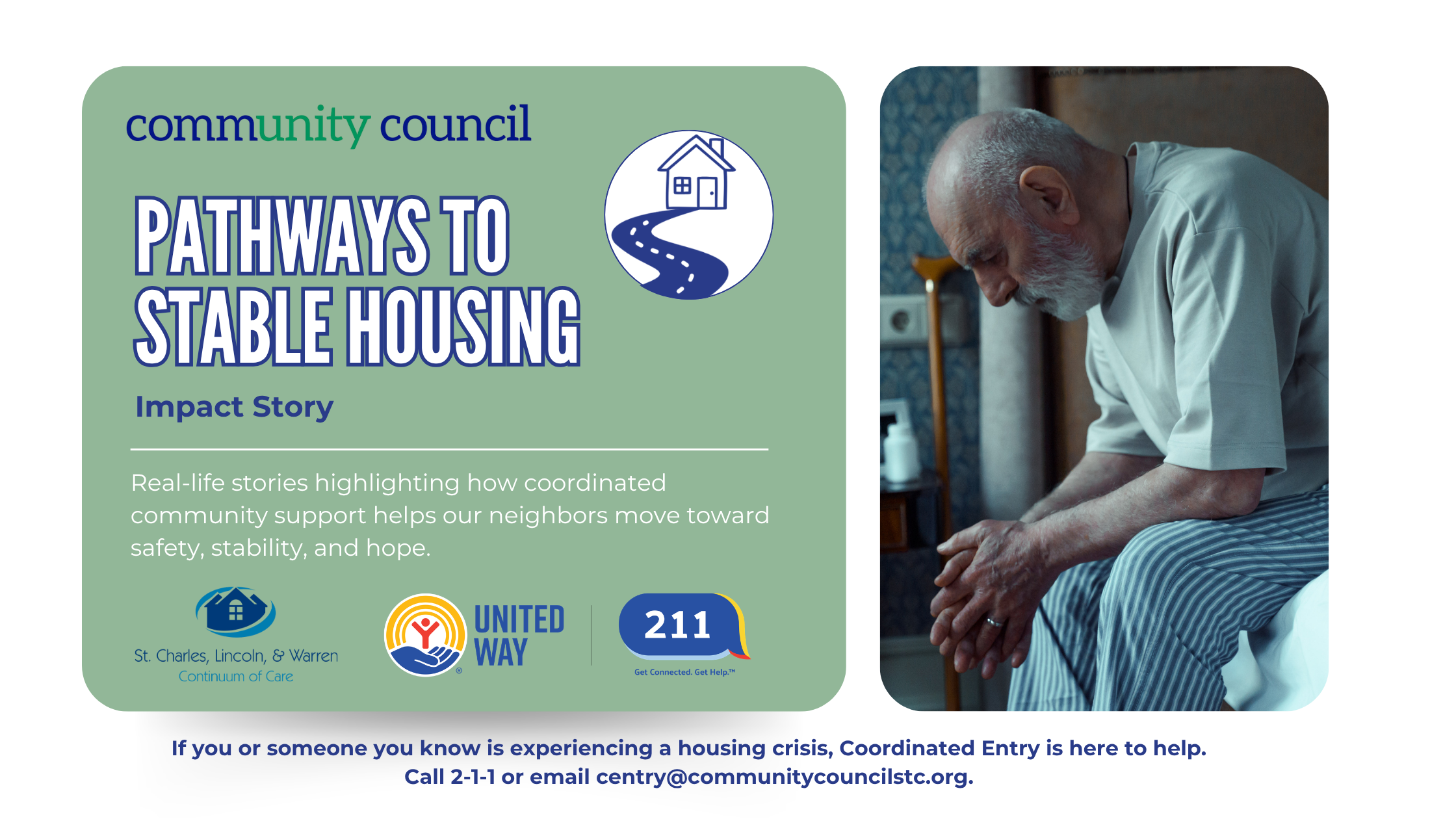
He is a 63-year-old man living with chronic health conditions, and over the years he has worked to maintain stability while his health and circumstances gradually made that harder to do.
He first reached out to the Community Council's Coordinated Entry Team in 2018 during a time when he was also caring for family members in his home, including his niece and her children. Even then, his focus was on keeping his household stable and meeting basic needs. As his health made transportation and consistent employment more difficult, he began relying on small, short-term supports throughout the community. First Step Back Home assisted with gas support to help him get to important appointments, while Sts. Joachim and Ann Care Service helped address food insecurities during difficult periods. Through Compass Health Network, he received support connected to medical appointments and case management, and Coordinated Entry continued providing housing resources and navigation support as his housing situation became more unstable. These resources were limited and temporary, and he continued navigating many challenges on his own while working toward long-term stability.
Over time, his situation became more fragile. A combination of declining health, financial strain, and repeated housing disruptions made it increasingly difficult to maintain long-term housing. Each time he lost housing, he worked to re-stabilize himself using limited personal funds, temporary shelter or motel stays when available, and support from family and community programs, including NECAC and St. Vincent de Paul. These periods were not stable solutions, but short-term responses to crisis as he worked toward something more permanent.
Despite these setbacks, he remained engaged in trying to secure lasting housing. With ongoing support and persistence over several years, he eventually identified a rental opportunity in September 2025. With temporary assistance to bridge initial costs, he was able to move into housing and establish a more stable living situation.
His experience reflects a long-term effort to remain housed in the face of illness and instability, using available supports as temporary bridges rather than ongoing solutions while continuing to work toward independence and stability whenever possible.
----------------------------------------------------------------------------------------------------------------------
Have you ever wondered how stories like these are gathered and shared?
Many of the insights that help communities better understand homelessness and housing instability come through outreach efforts, case management, coordinated assessments, and documentation entered into the Homeless Management Information System (HMIS). HMIS is a secure data system used by housing and service providers to help coordinate care, track services, and better understand the needs and trends impacting individuals and families experiencing homelessness.
The CoC Marketing Committee gathered a few stories from this year’s Point-in-Time Count to help highlight the real experiences behind the numbers. These stories offer a small glimpse into the challenges many individuals face and the ongoing work happening across the community to support housing stability and long-term recovery.
Learn more about the St. Charles, Lincoln, and Warren County Continuum of Care
Learn more about the annual Point-in-Time Homeless Count
If you or someone you know if expereinceing a housing crisis, Coordinated Entry is here to help. Learn how to Contact Coordinated Entry